 Coauthored by: Tirza Lofgreen
A home visit can reveal needs beyond medical care: a refrigerator without nutritious food, transportation that cannot accommodate a patient’s mobility limitations, or a family caregiver who needs relief. Addressing these challenges starts with knowing what support exists locally—and building relationships with those who provide it.
The HCCI Illinois House Call Project (ILHCP) is an education initiative that has equipped participating practices with live and online training, coaching, and community resources to strengthen their ability to provide quality care at home. As of today, practice "champions" across Cohorts 1 and 2 have cared for 6,008 new patients, exceeding our goal of 6,000 by the end of 2026.
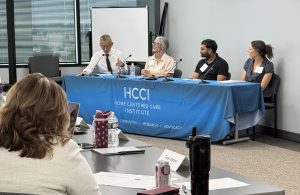
The participating practices are committed to age-friendly care for homebound patients, ongoing professional education, mentoring others, and raising awareness in their communities. Their dedication brought them together that day in Schaumburg, IL for “Scaling Care at Home: Strategies for Sustainable Growth.”
Here are key-takeaways from the day that can support you in your practice
• Build connections before a crisis
Moderator Gina Knight, President of the National Aging in Place Council, encouraged practices to develop a network of vetted referral partners. Drawing on her experience in home modifications and aging in place, she emphasized helping families understand services and funding options before an urgent need arises.
• Connect with community expertise
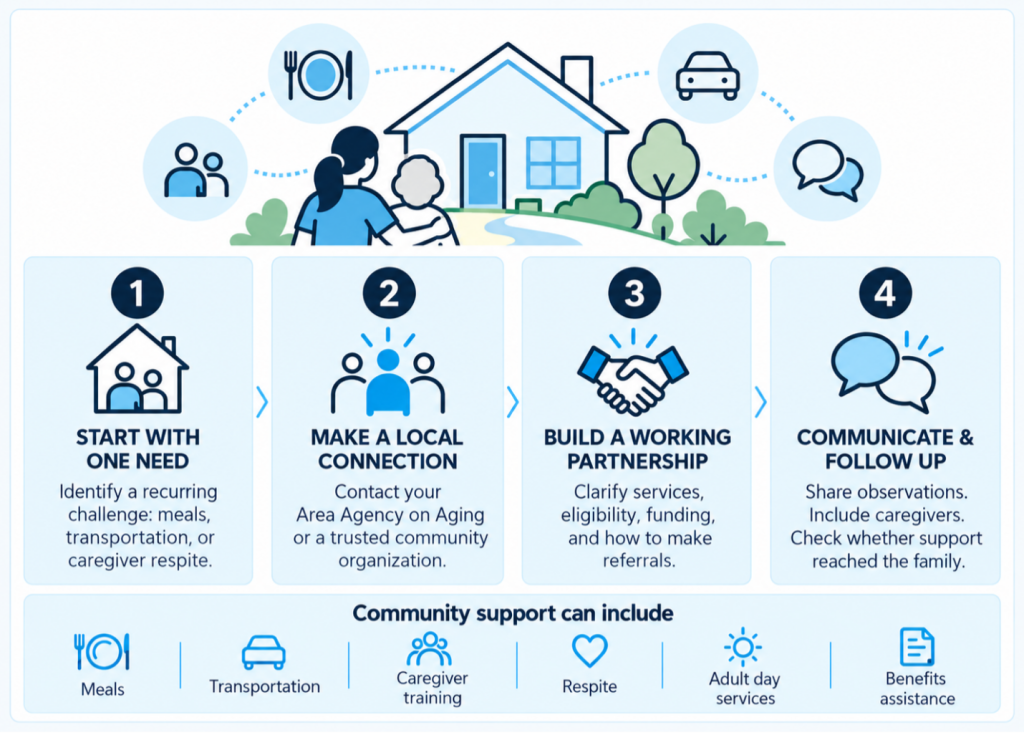
Robert Mapes of AgeOptions described resources including home-delivered meals, transportation, caregiver training, respite care, and benefits enrollment assistance. He urged practices to approach community organizations as partners, sharing information and data to understand and demonstrate the impact of their work.
• Bring caregivers into the conversation
Jenny Novy of Amada Senior Care highlighted communication between clinical teams and those supporting patients daily. Observations about medications, meals, weight, and changes at home can provide a fuller picture of patients’ needs. Helping family caregivers report those observations effectively strengthens their role in coordinated care.

Put the lessons to work
We recognize that resources vary by community, but practices can begin by identifying one recurring need. Are families struggling with respite, meals, or transportation? Contact a trusted local organization. Ask about services, eligibility, funding, and referrals. Establish how you will communicate and follow up to learn whether families received support.
HCCI’s ILHCP illustrates how education and community connections help practices take action. One conversation can begin a partnership that strengthens your practice’s value to patients and families—connecting them with the everyday support that makes care at home possible.
Jason Speaks of LeadingAge Illinois spoke to the group and recommended contacting your local Area Agency on Aging to identify services and trusted partners. Reaching out locally can be a concrete starting point for building relationships.
To find help in your community, visit eldercare.acl.gov/home